Starting a capital raise without a structured checklist is one of the most common mistakes fund managers make. The fundraising due diligence process is long, competitive, and unforgiving of gaps in preparation. Getting it right from the start protects your timeline and your credibility with LPs.
Key takeaways from this guide:
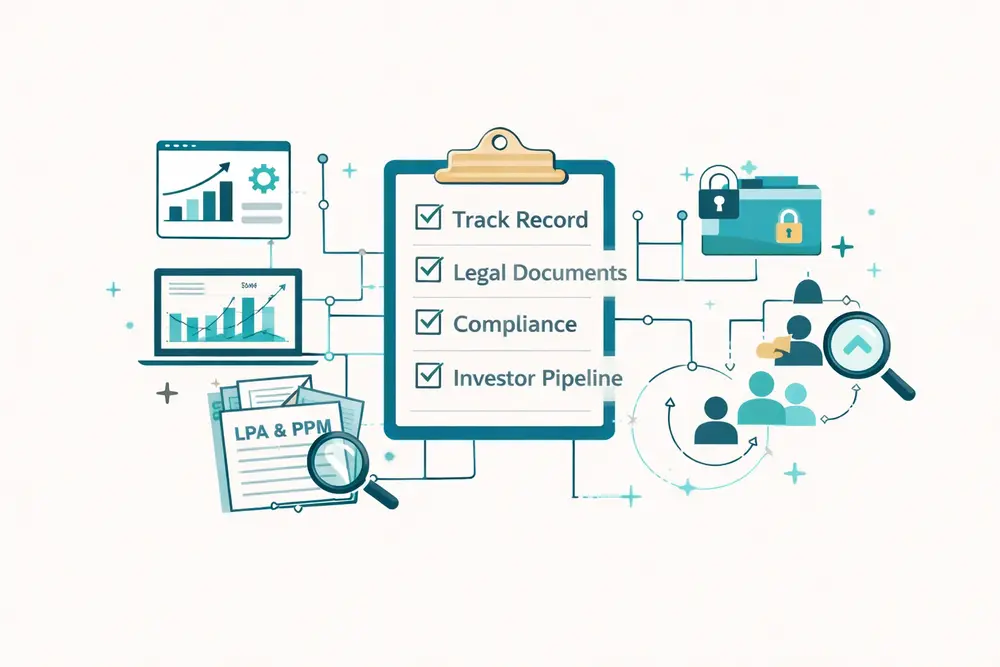
Your track record is the first thing institutional investors will examine. It needs to be audited, consistent, and presented in a format that aligns with ILPA or GIPS standards where applicable. Gaps, inconsistencies, or unverified performance figures will slow your process or end conversations early.
Track record checklist:
Read more: Using Portfolio Performance Data in Fundraising
Start with your Limited Partnership Agreement and Private Placement Memorandum. These are the two documents LPs and their counsel will read most carefully, and both need to be in near-final form before serious diligence conversations begin.
Beyond those core documents, prepare:
Getting legal ready early avoids the bottleneck that stalls more raises than any other single factor.
Map your target LP universe at least six months before your first close date. Effective pipeline management means segmenting by LP type, relationship warmth, likely check size, and decision-making timeline.
Build your CRM discipline early. Track every conversation, commitment signal, and open question. Inconsistent pipeline records create avoidable confusion when you are managing 30 or more concurrent LP processes.
Investor relations during a raise is not a passive function. It requires a structured cadence of outreach, consistent messaging, and tight version control over every document you share.
Your communication plan should cover:
Inconsistency in what different LPs receive is a governance risk. Platforms like Capcade's fundraising workspace resolve this by keeping all investor communications, documents, and tasks in a single permissioned environment.
Read more: Effective Fundraising: Tools and Techniques for Capital Raising Success
Compliance is not just a legal requirement during a capital raise. It is a signal of operational maturity that sophisticated LPs use to assess your firm's risk culture.
Prepare and review before launch:
Many GPs underestimate how thoroughly institutional LPs review compliance infrastructure during operational due diligence. A compliance gap discovered mid-raise can delay a close by months.
Most funds still run capital raises across email threads, shared drives, and disconnected spreadsheets. This creates version control failures, audit gaps, and unnecessary delays when LPs ask follow-up questions.
A purpose-built workspace handles:
Capcade's fundraising workspace brings documents, data, and workflow coordination into one compliance-ready environment. Teams spend less time chasing status updates and more time managing LP relationships.
How early should you start preparing for a fundraiser?
Most experienced GPs begin preparation 12 to 18 months before their target first close. Legal, compliance, and track record preparation all take longer than expected.
What is the most common gap in fundraising readiness?
Operational due diligence preparation. LPs increasingly scrutinise back-office processes, data security, and compliance infrastructure. Many managers focus only on investment performance and underestimate this dimension.
How many documents should be in a diligence room at launch?
A well-prepared diligence room typically contains 40 to 80 documents at launch, organised by category. Partial rooms signal unpreparedness and slow LP decision-making.
What is a tiered permission structure in a fundraising context?
It means different LP contacts see different layers of information based on their stage in the diligence process and their specific information needs. Tier 1 might include marketing materials; Tier 3 might include audited financials and portfolio data.
When should you introduce workflow tooling into your raise?
Before your first LP conversation. Retrofitting a system mid-raise creates version control problems and wastes team capacity during the highest-pressure phase of the process.
Fundraising readiness comes down to preparation depth and process discipline. The teams that raise capital efficiently are rarely the ones with the best story alone. They are the ones who arrive at every LP meeting with clean data, tight documents, and a process that signals institutional-grade operations. That is where the raise is won or lost.
Schedule a call with one of our advisors for more information.


.svg)


.svg)


.svg)